RNZ: Health system in intensive care and starting to flatline, experts say
There are only so many ways we can say it: our public health system is in serious trouble.
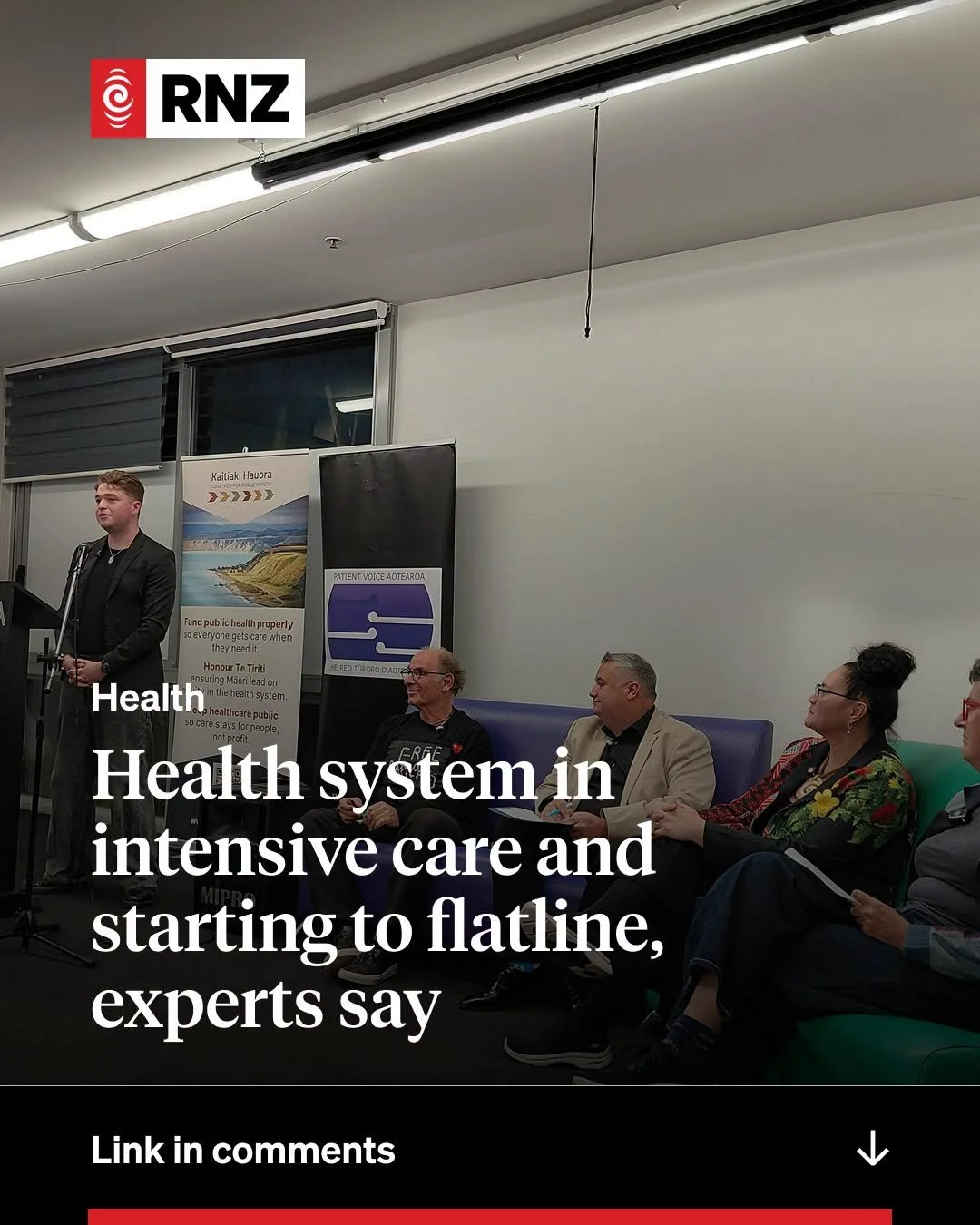
We’ve said it with numbers. Health workers have said it from the frontline. Patients and whānau have told us what happens when they can’t get the care they need. And on Monday night at Pātaka in Porirua, we brought five different perspectives together to talk about the Health of Our Nation.
RNZ reporter Penny Smith was there, speaking with our speakers and people in the audience about what they are seeing and experiencing.
The diagnosis was not exactly reassuring.
Dr David Galler spoke about chronic underinvestment, workforce shortages and the risks of increasing privatisation. GP Dr Lucy O’Hagan described a workforce facing a “pandemic of burnout”. Louisa Wall spoke about what happens when Māori can’t access primary care. Malcolm Mulholland warned of an increasingly two-tier health system, while Luca Zampese laid out the grim reality facing young people trying to access mental health support.
And then RNZ talked to people in the room.
Long-time Cannons Creek resident Sandra Merediths summed up the health system in two words “bloody shocking.”
We agree, Sandra! And we think people in Aotearoa New Zealand should hear all of it, look at the evidence, and decide whether what is happening to our public health system is good enough.
Because we are running out of time to keep having the same conversation.
What we’re asking for isn’t complicated. Fund public healthcare properly, honour Te Tiriti o Waitangi, and keep healthcare public.
In October, Health of Our Nation goes on the road, with Dr David Galler and Malcolm Mulholland travelling from Bluff to Cape Reinga to hear from communities around the country and keep public healthcare firmly on the agenda.
If you missed us at Pātaka, you can listen to RNZ’s excellent Morning Report story, read Penny Smith’s full report, or watch the recording of the event livestream.